Thursday, October 9, 2008

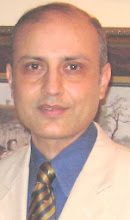
The Royal Family of Nepal Visits SPS (1982)....

Time, Fate and Destiny........one could never have imagined the misfortunes that befell the Royal Family of Nepal and that HRH (then) Prince Gyanendra (North Point'63) would become King in 2001 for a brief seven years. The fall of the Shahs in Nepal was a sad event and with it Nepal has lost its strong identity and standing in the world.

When we spent 2001-2002 in Nepal-India, I was in Kathmandu w/family at the time of the massacre and King Gyanendra's accession to the throne. Afterwards, I had the rare privilege of working with his 'King Mahendra Trust for Nature Conservation' and was later given the distinct honor of editing a book length collection of King Gyanendra's speeches to institutions around the world (published as a book).

Old Josephites of his vintage speak of his keen debating, writing and presenting skills.......I can certainly endorse and verify their claims!

Best of SPS - Rectors Goddard & Dang (1982)!


Paulite 1984 Nostalgia !


I received a surprise call and note from Mr. Dang in December 2004 and spoke to him again, thereafter (first contact since school); here's what our old Rector had to say:

MESSAGE: 4th December, 2004

Dear Viraj :

This is just to check if your E-mail is correct. The new Government; the idealistic, secular, liberal, government, and my Old Students in the Government and the Planning Commission are supportive of the Book-length-feature of the Quarterly International Journal of Sustainable Development, on "India's Infrastructural Challenge : Issues of Equity and Sustainability", and I think you, with your expertise and your globally relevant books and your Ph. D., MS in urban planning and so on, and having spent 2001-2002 in Nepal-India, working as a Development Consultant, set up an institution, and having taught International Relations and having published your 2 books on globalization and global change and received good reviews from Irani's "The Statesman", Calcutta, should be the Editor !

I was extremely saddened to hear of your father’s passing away – a true Paulite, a thorough and rare gentleman, an asset to St. Paul’s – I might add ; there aren’t too many OPs of his caliber and upbringing left in India!

Affectionate regards to your lovely wife Tracy, and boys Nik and Shawn.

HARI DANG.

[Awarded Padma Shree] (Ex-Rector, St. Paul’s Darjeeling 1977- 84) Mountaineer/Naturalist: Member -Everest Expedition of 1962.
Chief Editor, Quarterly International Journal of SUSTAINABLE DEVELOPMENT; President-Chairman, The (Third) World Education Centre Society (TWECS); The India International School; Author of “HIMALAYAN ENVIRONMENT-Issues and Concerns of Conservation and Development”; “India’s New Education Policy”; “The Snow Leopard of the Himalayan and Its Prey; “Blueprint for School Education”; "Timebound Total Literacy”; “Borderless Education:The Role of ITES”; “Gender Sensitivity in Education”; “The Vandalisation of India’s Wilderness since Independence”; and “India’s Heartland : Central Asia” (under preparation); President, Society for Technology and Action for Sustainable Development (TASD); Chairman, Centre for Development and Environment (CENDEVEN), Renuka Dang Memorial Drought Proofing & Desertification Research ; Woman and Child Development, Total Literacy ; and Sariska Tiger Conservation and Wilderness Centre, (at) Village (s) Jagannathpura/Narayani Mata and Roopu-ka-Bas, Tehsil Thana Ghazi, District Alwar, Rajasthan; The International Journal for Sustainable Development ®
* Chairman, International Himalayan Environment Programme and Action Projects Conference; United Nations International Year of Mountains, 2002; UN Year of Water 2003; Member, Governing Body, Automobile Association of Upper India; Founder-Member, Society for Urban Regeneration of Gurgaon and the National Capital Region, and the Indian National Trust for Art and Cultural Heritage (INTACH); Former Member, Central Advisory Board of Education (CABE), National Integration Council, National Commission on Teachers, National Children’s Board, Indian Board for Wildlife; Society for the National Institutes of Sports, Government of India (SNIPES); All India Council of Sports; Expert Committee on Infrastructure Development, Chairman/Convenor, sub-groups/committees on the Gulf of Kachchh in Gujarat, India; Honorary Chief Patron, The (Indian Education) Technology Mission; National Campaign for India (NCFI).

Wednesday, April 16, 2008

The Adelaide-Paulite Connection!


An extraordinary reunion of Old Paulites took place in Adelaide, South Australia in October 2005 that effectively represented the years between 1937 and 1984 (almost 50 years of the 186 year history of St. Paul’s). It was a memorable meeting and a strong affirmation of the Paulite tradition! Moniti Meliora Sequamur.


The University of Adelaide is one of Australia's most research-intensive universities with a rich tradition of excellence in education and research, with world-class academics and a vibrant student life. Since its establishment in 1874 the University of Adelaide has been amongst Australia's leading universities. Its contribution to the wealth and well-being of South Australia and Australia as a whole - across all fields of endeavor - has been enormous.The University of Adelaide (colloquially Adelaide University or Adelaide Uni) is third oldest in Australia and is a member of the prestigious Group of Eight as well as the Sandstone Universities.


Adelaide.....Beautiful Adelaide!

Scenic views of Adelaide!
Rundle Mall

North Terrace & Torrens


Victoria Square


Sunday, April 13, 2008

Paulites in Darjeeling!


"My intense desire to return to Darjeeling and St. Paul's finally materialized in May 2006....after a span of 22 years. I spent five wonderful days in Darjeeling and shared some precious moments with good friends".


Paulites - "Sailu"-Sailesh Pradhan (Havelock'84), "IRay"-Indraneal Ray (Lawrence'84), Mahesh Chettri (Lawrence'84), Viraj Thacker (Havelock'84) and the famous Jamling Tenzing "Jumbo" (Havelock'85). One can read about Jamling's Everest Expedition and climb in his book "Touching My Father's Soul".


Photos:

(With Mr. and Mrs. Jamling Tenzing and Sailesh Pradhan)

(On the Mall with Indraneal Ray)

(SPS-Quad with Mahesh Chettri)

Wednesday, April 9, 2008

Old Calcutta...As Time Goes By!


POV: Can Calcutta still hang on to its past………….?

The ghosts of the Raj were never anorexic wraiths. They were as roly poly as the pudding enshrined in those temples to continued colonialism - Calcutta’s clubs. The sun may have set on the empire, no problem…Abdul Bearer would pad up resplendent in cockscomb turban bearing the sundowner and a plate of finger chips. Proper thick — cut wedges straight off the iron karhai . To call them `French fries’ would be to stand in danger of being challenged to an encounter on the duel grounds; your choice of cutlery. Nostalgia feeds off food more than any other sustenance of memory. Brown Sahibs, flotsam of the Raj, knew that they would never feel its absence as long as they could gather in those musty club dining halls, and peruse the smudgily typed menu card on tables covered in damask. Frayed, grey, but as impeccably starched as an upper lip. The `mug’ cook was in the club kitchen; all was well with the world. Calcutta took far longer to lay the ghost of empire, partly because Calcutta took longer with everything. But it was more because colonialism was so deeply entrenched in The Second City of Empire. The leisurely luncheon continued — with cold cuts ( never `starters’), soup ( in plates, never bowls), fish entrée ( with proper fish-knives) , main course, pudding, petit fours, coffee ( in demitasse cups – like the rest of the crockery, bearing the club insignia).

The tradition was reinforced in the chandeliered ballrooms of the Grand, Firpo’s, Spence’s and Great Eastern Hotels. Indeed, the slightly shop-soiled Burra Sahib culture continued into the late 1960s, when it was finally “gheraoed” and superannuated by the satraps of Chairman Mao. Then everything changed, changed utterly, and a terrible “Dal Makkhani” was born. The “bhadralok” were cornered in their crumbling mansions, and the city was seized by the Marwaris, the second syllable pronounced `war’, as in battle. But Mr. Mukerjeah didn’t mind Shri Jalan taking over business so much as he minded Arora-ji “Punjabifying” his club menu. When the baked beans on toast arrived with chopped raw onions, it was the end of civilization as we had known it. The clubs have tried to hang on to some of the repast of the past, but they have seen the future, and it reeks of “pav-bhaji”. Ultimate perfidy, even the Barrister Bongs, those last bastions, are ordering it at the ( still) Royal Calcutta Golf club. To its eternal credit, however, the `Bengal’ still retains a passable version of its fabled steak and kidney pie, serving it to the terminally nostalgic every Friday.

The Christmas turkeys, alas, have had the stuffing knocked out of them. And has anyone even heard of guinea fowl in an age when Burra Din has fallen to bara kabab in a bloodless coup? Clubs have given up the ghost of most Menus past. Where can they find either the makers or takers for their signature dishes? Calcutta Club’s Roast Mutton with mint jelly, Tolly’s goose liver paste ( never pate) on thin buttered toast. You may still get waffles with honey after packing up your irons at the Royal Calcutta Golf Club, but it would be foolish to expect hot buttered scones or clotted cream. Sausage rolls have been ousted by the samosa. The Country Captain Curry which was tucked into during the lunch break of a cricket match has gone the way of flannels and the gentlemen who sported them. Once staples can’t be had for love or any other tender. Roast ox-tongue , leg of lamb embellished with crisp bacon and crowned with a miniature chef’s toque, the chops and cutlets which sustained the “baba-log” at home as did the stews — Irish, mutton ragout and Lancashire hot-pot. The cognoscenti knew that some of these had to come with dumplings, all flour, or with half potato or semolina. The ubiquitous hot- and-sour for today’s chili-coarsened palates have replaced the hearty English soups. Oxtail, pea with sausage, consommé and the Anglo-Indian Mulligatawny or `Dol’ soup. And, is anyone left to sing the requiem of the famous puddings, which surface only in a sad avatar in clubs ( or some last remaining hill-station guest-house)? Tipsy, cabinet, plum with brandy sauce, and the steamed fig, date or ginger, each with its designated anointment. Order ye caramel custard while ye may, “gajar halwa” could set in any day!

(Adapted from an article on the India Times News Network)